Waterproof Vinyl Plank Installation in Bowie, Maryland, with published price ranges up front, the rooms measured and the subfloor checked on site, and one written figure before any work begins.
Waterproof Vinyl Plank Installation in Bowie, MD by Bowie LVT Flooring Company
We install waterproof vinyl plank in Bowie rooms where water is not a rare accident but a regular visitor. Kitchens qualify. So do laundry rooms, rear entries, baths, and finished basements that sit below grade and wait for the next heavy rain to test every seam and low corner.
South Bowie owners know the pattern well. A washer hose ages quietly for years, then lets go on a Tuesday. A basement floor that stayed dry through spring shows damp at the baseboards after one August storm that dropped rain faster than the ground could take it.
Other floors forgive none of that. Carpet holds water and odor. Laminate swells at the seams and never quite settles back. Waterproof plank takes a different approach. The core itself resists water through and through, so a spill or a minor leak becomes a cleanup job instead of a flooring decision.
What Makes a Plank Waterproof
Waterproof starts in the middle of the board. Cores built on SPC construction use a dense mineral based build that does not absorb water, swell, or soften when a puddle sits overnight. WPC construction builds its core differently, with a lighter feel underfoot, and it also resists water as a core rather than relying on a surface coating alone.
Surface protection sits on top of that core. The wear layer takes the daily beating from shoes, paws, and dragged laundry baskets, while the sealed surface keeps spills on top where a towel or mop can reach them. Locking edges fit tight board to board, which slows water at the seams far better than the loose joints on aging laminate.
Edges and ends still decide real world results. A waterproof board fitted carelessly at a tub, a toilet flange, or a rear door threshold leaves paths for water to reach the subfloor or slab edge. Careful cutting, proper fitting at every wet wall, and sound transitions turn a waterproof product into a waterproof floor.
Rooms Where Waterproof Plank Earns Its Place
Finished basements lead the list in Bowie. Woodmore and Fairwood basements serve as family rooms, offices, and guest space, yet the slab below them moves moisture even in houses that have never flooded. Plank over a tested and leveled slab lets a basement be mopped clean after a sump event, then returned to normal use.
Kitchens and laundry rooms built during the 1990s form the second wave. Sheet vinyl from that era lifts at corners now, and laminate near sinks shows white edged swelling that owners often notice only after it spreads. Waterproof plank suits both rooms because the threats there are daily and small. Ice from a freezer door. Splash at the sink. Drips along a washer connection that nobody sees behind the machine.
Baths and entries round out the case. Wet boots land inside the back door all winter. Bath floors take splashes at every shower, and humidity lingers long after the mirror clears. A floor that treats that moisture as routine, rather than as damage in progress, fits how these rooms actually get used.
Recent Project: Waterproof Vinyl Plank Installation in South Bowie
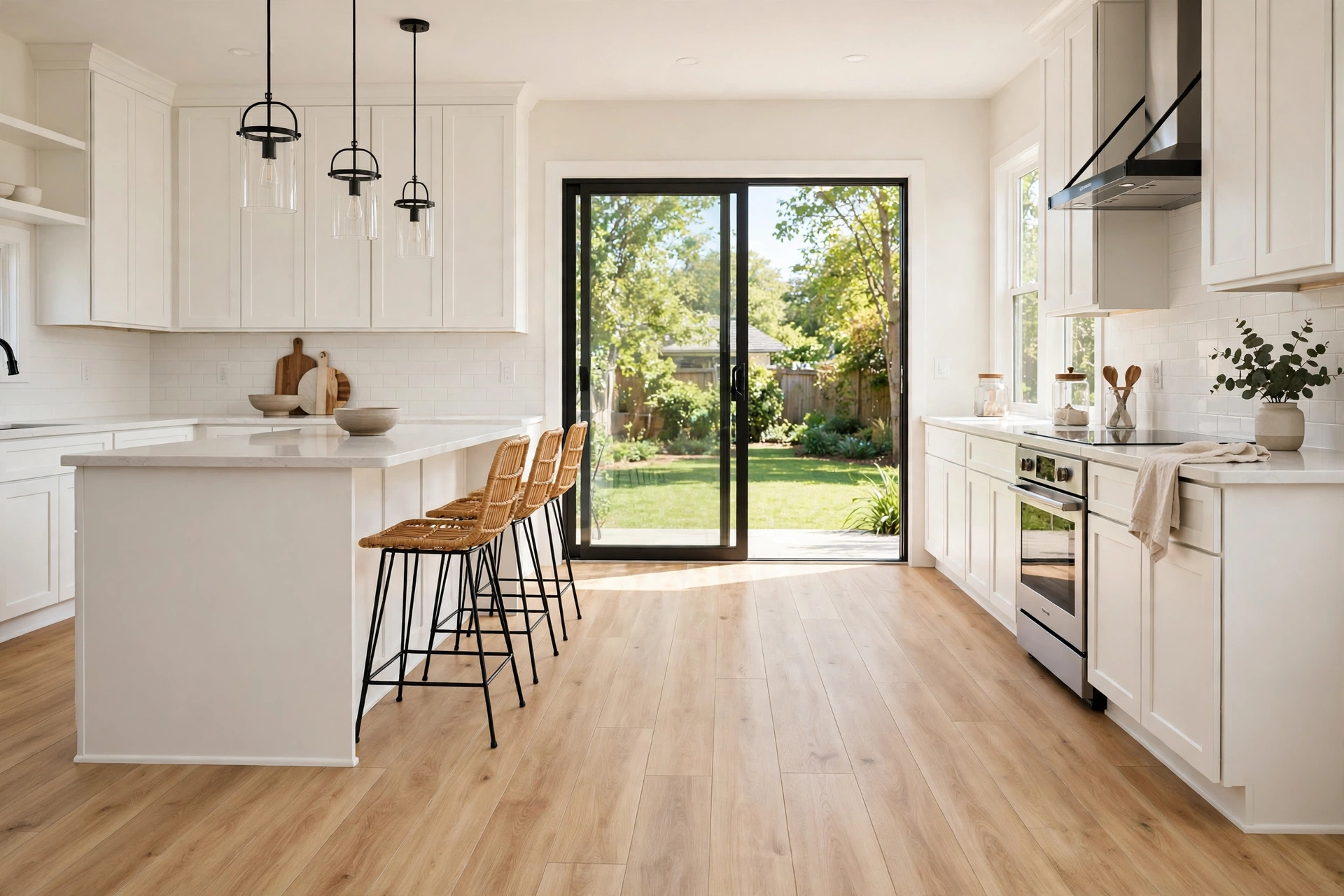
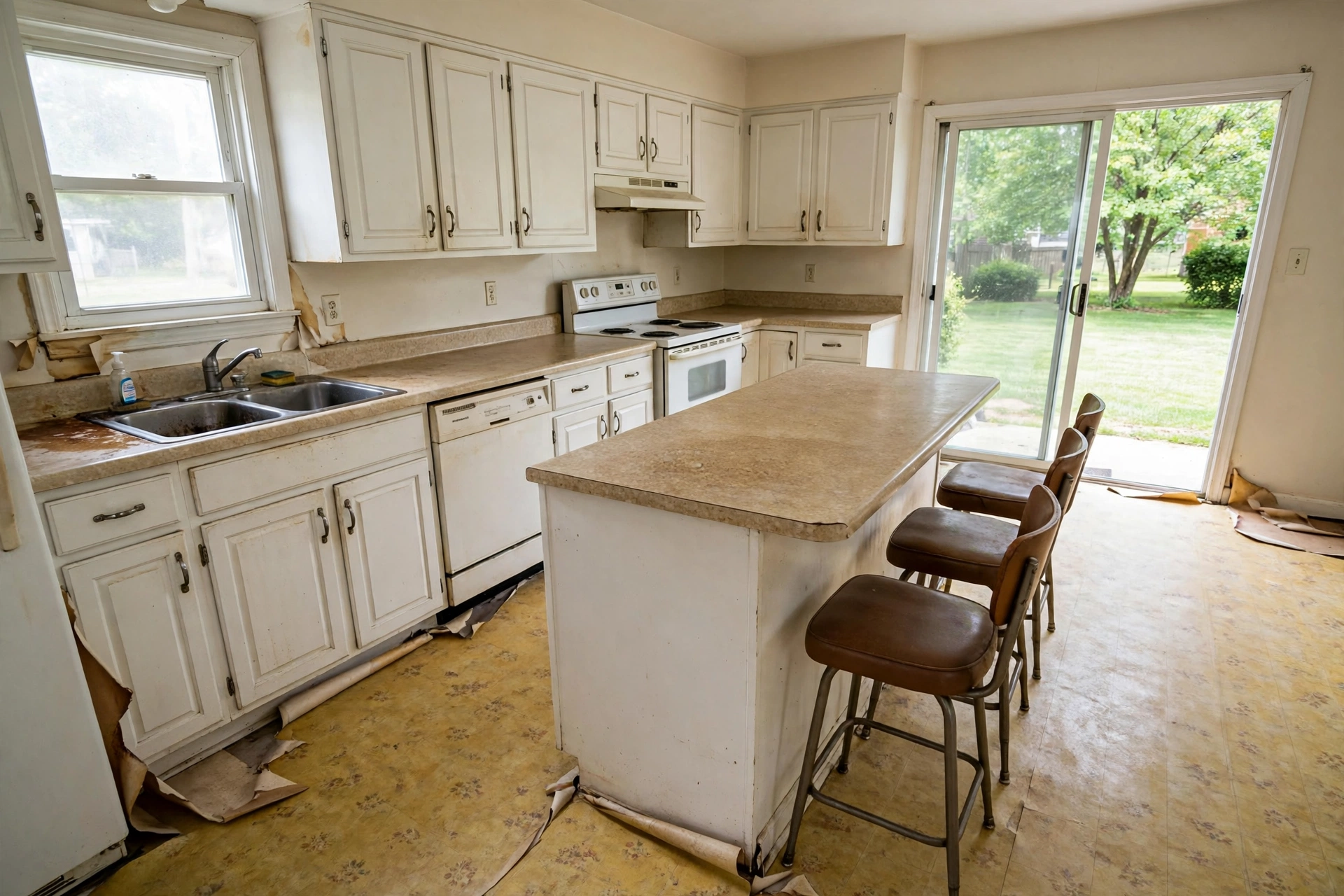
BEFOREAFTER
A South Bowie finished basement and adjoining laundry room carried carpet that had taken moisture at the low wall more than once and held a stale smell even after cleaning. Crews removed the carpet and pad, tested the slab, ground down a high seam, and leveled the low corner where water had pooled. Waterproof rigid core plank then covered the family area, the laundry room, and the short hall between them, with careful fitting at the floor drain and the washer wall. The basement went back to daily use with a floor that can be mopped dry after any future wet spell.
Turnaround
Four days on site, including slab testing and leveling.
Final Price
$6,865
Waterproof Vinyl Plank Installation Cost in Bowie, MD
No Bowie company publishes a local price list, so planning here rests on published figures, labeled as published figures. Published guides place luxury vinyl plank installed at $3 to $8 per square foot. A 1,000 square foot job runs $3,000 to $8,000 in published guides, while install only labor commonly runs $1.50 to $4.50 per square foot in published guides. For waterproof plank scope in Bowie, published figures run $3,600 to $8,200.
Basements move a figure in ways kitchens rarely do. Slab testing, grinding, and leveling add steps before the first board is cut, and a floor drain or a sump pit adds careful fitting time. Islands, pantries, and appliance alcoves slow a kitchen layout that looks simple in square feet alone.
Product build also shifts the total. Dense rigid core boards cost more per box than lighter builds, and thicker wear layers add cost that busy wet rooms usually justify. Removal matters as well. Carpet lifts fast. Glued sheet vinyl in a laundry room can take half a day of scraping by itself. A written figure follows the visit, after the slab or subfloor has been tested and seen.
Moisture Work Comes Before Plank Work
Good waterproof installations start with suspicion. Crews test the slab or subfloor rather than trusting a dry look on a dry day, because Bowie basements can pass a glance in October and fail a family in July. Readings, stains at baseboards, and the history owners describe all feed the same decision about prep.
Prep then follows the findings. Low areas get leveled so boards sit flat and locks stay closed underfoot. High seams get ground down. Areas with past water trouble get cleaned and addressed before flooring covers them, since plank hides a slab from view the moment the last row lands.
Maryland treats LVT installation as MHIC governed home improvement work as a market matter, and Bowie projects sit within Prince George's County processes in general terms. Inside the house, our standard stays simple to state. Test first. Prep what the test finds. Fit tight at every wet edge. Leave the owner a floor that handles the next spill as a chore, not a crisis.
How much does waterproof vinyl plank installation cost in Bowie, MD?
Published guides place luxury vinyl plank installed at $3 to $8 per square foot, a 1,000 square foot job at $3,000 to $8,000, and install only labor commonly at $1.50 to $4.50 per square foot. Published figures for waterproof scope in Bowie run $3,600 to $8,200, with slab prep, room cuts, and product build setting your place inside that span.
Is waterproof plank the same as water resistant plank?
No. Water resistant surfaces slow spills from above but may use cores that still swell if water sits or reaches an edge. Waterproof plank uses a core built to resist water through its whole thickness. Seams and edges still need careful fitting, which is why installation quality matters as much as the label on the box.
Will waterproof plank survive a basement flood?
A floor can usually be cleaned and kept after many basement water events, provided cleanup starts promptly and water did not sit for days. Deep or repeated flooding still calls for lifting sections to dry the slab fully, and that judgment gets made after the water is out.
Does a basement slab need testing before installation?
Yes. Concrete moves moisture even when the surface looks dry, and testing tells the crew whether the slab is ready, needs drying time, or needs added prep. Skipping that step risks a floor that looks fine at first and develops problems at the seams later. Testing takes little time compared with removing a finished floor.
Can waterproof plank go in a kitchen and laundry room on the same visit?
Often, yes, and adjoining rooms benefit from one continuous run with no transition between them. Appliances move out and back in sequence, and cuts around cabinets and connections happen in the same pass. Owners should plan for the washer to be offline during its turn.
How should I clean a waterproof plank floor?
Sweep grit often, mop with a damp rather than soaking mop, and wipe spills when you notice them rather than at the end of the week. Harsh steam can stress locking edges over time, so plain cleaning methods serve the floor best.
Get Your LVT Flooring Quote
Tell us which rooms need floors. We read every request that comes in and respond with the published range for that kind of work and the next step, starting with a visit to measure the rooms and check the subfloor.
Prefer to talk it through first? Send the form and we will call you back at the number you give us.